
Embedded Computers and the AI Trend
Posted on April 15, 2026
There has been a lot of buzz around the rise of AI and how it would transform the industry. While the media focus is on things like chatbots or image generation, the real revolution would be for enterprise systems.
Embedded applications have a lot of tasks that can be efficiently managed by smart AI automation, sometimes even unlocking entirely new capabilities that were out of reach before. And this isn’t just theoretical – companies are already implementing AI products in their embedded systems, leveraging the technology to get ahead of the curve.
Let’s talk about what these use cases are.
Computer Vision
One of the biggest gamechangers for automation is the viability of computer vision. The inability of PCs to recognize objects from real-world footage has always been a major limitation. This hampers things like smart manufacturing, where the robotic arms need perfect placement of products to not get stuck, or automated warehousing, where the machine cannot even pick up and put the objects in the right shelves without human intervention.
Computer vision changes that. Thanks to AI-based image recognition, embedded PCs can now actually recognize objects and environments accurately. And this works with normal camera footage, so it doesn’t require any special equipment and can be integrated in a variety of scenarios.
Robotics, surveillance, smart vehicles, smart manufacturing, warehousing, automated packaging – there are a lot of fields where computer vision is transformative. The best part is that as AI gets more efficient, these algorithms can be deployed through edge computing, which is essential as these applications require immediate decision-making and can’t rely on cloud servers.
Predictive Maintenance
The most critical factor that sets industrial computers apart from a normal home PC is the maintenance. Embedded computers are meant to run for long hours, if not 24/7, juggling extensive workloads that push the hardware to the limit.
This means they break down far more frequently than a home computer as well, and require consistent maintenance. In an industrial or commercial scenario, this breakdown represents more than just an inconvenience, as a delay or halt in the work causes actual losses.
That is where predictive maintenance comes in. AI algorithms can analyze the historical maintenance data and predict when a machine next needs to be tuned up, pre-empting a breakdown. This ensures a smooth transition, minimizing downtime and reducing fatal failures as well.
Smart Analytics
Predictive maintenance isn’t the only bit of useful data analysis AI can perform in embedded applications. There is a wide variety of data collected by these systems, and AI can use this to adapt in real-time.
It includes computers used in healthcare, transportation, manufacturing, or commercial spaces – AI algorithms can analyze the data to understand the usage patterns, predicting the functions it needs to perform. This is crucial for quick decision-making, as AI can factor in all the available data immediately, giving operators the relevant options to choose from.
Smart analytics is revolutionizing stocking as well. Instead of waiting for inventories to run low, AI can accurately determine when a product needs to be restocked, anticipating the demand.
Is AI the Future of Embedded Computing?
AI is not the universal panacea that many are hyping it up to be. But AI is good at specific tasks, mostly things involving automation or rapid analytics. And these are exactly the kind of niches occupied by embedded PCs.
Embedded computing in general has moved away from the cloud toward an Edge computing model, focused on crunching the data onsite to give quick responses. AI fits neatly into this framework by being even smarter at processing this data and making better real-time decisions.
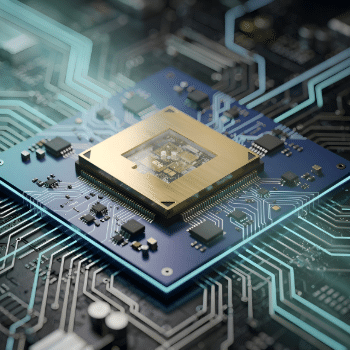
Of course, this requires more capable hardware as well, and we are seeing a shift that reflects this new reality. New age embedded computers are shipping with AI-ready chips, often with GPU support to leverage more powerful models.
Applications utilizing AI algorithms to improve performance are already being implemented, with a lot more in the works. So yes, AI seems poised to become a crucial part of the embedded computing framework for all industries. Any company investing in a new embedded setup now should take note and invest in hardware that can keep up with this new reality.
