
Wide Temperature Operation: A Key Factor for Industrial Computing
Posted on October 7, 2026
What are wide temperature industrial computers?
Wide temperature industrial computers are rugged PCs designed to operate reliably in extreme heat and cold where standard computers may experience component failure, instability, or thermal throttling. They typically use fanless passive cooling, industrial-grade components, sealed enclosures, and temperature-tested hardware to support demanding applications such as vehicle computing, food processing, pharmaceutical storage, and smart manufacturing.
Industrial computers are deployed in a wide variety of situations, involving all kinds of conditions. As a result, the system doesn’t just need to be rugged in terms of vibration resistance, but also be able to operate at temperature extremes. This includes high-heat environments found in many outdoor installations and manufacturing sites, and sub-zero conditions of food storage and meat processing facilities.
It is tricky for a computer to deal with these unusual temperatures and keep functioning normally, but industrial PCs have to overcome this challenge. And leading embedded systems manufacturers like Cincoze have done just that. Let’s look at what the challenges are and how they are being overcome.
Problems posed by high temperatures to embedded PCs
Heat is an issue for embedded systems even without considering the environmental aspect. The processor produces a significant amount of heat in operation, raising the temperature of the internal components, including both the processor itself and the memory. Apart from degrading the components in the long term, high temperatures can cause the CPU to throttle performance, lowering its output to reduce the heat.
For desktop computers, this is fixed through active cooling systems. Fans in the chassis circulate the air, blowing in cool air and keeping the system from heating up too much. Desktop computers are usually also installed in air-conditioned premises, where the environmental temperature is low too, helping the system stay cool easily.
But for industrial computers, internal cooling fans are not an option. The openings would let dust in, and moving parts like this represent a frequent point of failure. The industrial environment is also not one with external cooling, which means that the computer must also deal with environmental heat.
Challenges of low temperatures for industrial computers
Having a cooler environment seems like something that would be exclusively beneficial for computers. After all, seeing all the issues with heat management, wouldn’t it be better for an industrial computer to be deployed in an environment that was already cold? To an extent, that’s true, but there is a difference between cool and freezing. Subzero temperatures way beyond the standard operating range of a PC pose their own problems.
Past a certain point, even colder temperatures negatively affect PCs. Extremely low temperatures can affect the electronic components on a fundamental level, preventing them from starting up properly, and causing instability as individual modules fail. Then there are material issues, as the cold makes components brittle, breaking joints due to contraction.
And if the PC enclosures are not watertight, then frost is an issue too. Condensation can freeze and then short-circuit the components, causing catastrophic failure of systems.
Techniques used by industrial PCs to function in temperature extremes
So how does a computer deal with extreme temperatures? With multiple design and qualitative improvements.
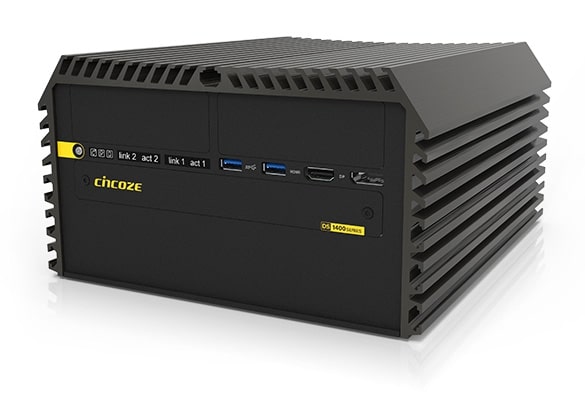
For handling high temperatures, the computer needs passive cooling systems. Fanless rugged PCs don’t have any openings in the chassis, preventing any dust or frost from getting in, while using a smart heatsink design to radiate the heat. This means that the whole PC enclosure has extruded aluminium fins to passively release the heat buildup even without external cooling.
For dealing with the cold, high-quality industrial-grade components are used. These components are tested to be able to operate at extremely low (and high) temperatures without failing. The entire system is also cycle tested as a unit, ensuring that the computer can indeed boot up in subzero temperatures without any loss of stability.
Does your application need wide temperature operation systems?
Generally speaking, not every industrial computer needs to be rugged or able to operate at extreme temperatures. It is the systems expected to be deployed in harsher conditions that need this functionality. This includes vehicle-mounted computers, panel PCs used in food processing or pharmaceutical storage, or the systems integrated into smart manufacturing plants.
Computers like these face either extremely high working temperatures or extremely low temperatures, and unless the PC is designed for handling these safely, you will run into issues down the line. It is crucial to invest in an industrial computer that can reliably handle the conditions thrown at it, and keep performing at its peak efficiency without breakdowns.
Cincoze is one of the few embedded computer manufacturers that specializes in high-performance rugged PCs, and its systems are designed with wide-temperature operation in mind, certified to operate smoothly between -40℃ and 70℃. Don’t rely on promises alone, however – the best way to verify the performance of a computer in extreme temperature conditions is to test it out. Thanks to Global American’s partnership with Cincoze, you can get a prototype of their rugged PCs and see their wide temperature operation in practice.
