
How Industrial Computers Overcome the Issue of SSD Performance Slowdown
Posted on November 4, 2026
SSDs are the de facto option for high-performance data storage, and it’s not just because they are faster. The lack of moving parts makes SSDs more reliable as well, and they are basically considered failure-proof.
But they aren’t perfect. Largely due to the rigors of industrial applications, even the best SSDs get worn out over time, reducing their performance and even the data reliability. Why does this happen? How can manufacturers abate this issue? Let’s find out.
How SSDs work
Traditional hard disk drives are made of platters of spinning magnetic discs. This gives them inexpensive storage, but also slows them down, as data access requires a specialized arm to physically access each memory sector. It also creates a point of failure, as this mechanical arm or the motor of the spinning disks can get stuck or break down.
Solid State Drives, as the name suggests, bypass this issue entirely by using solid-state memory instead of discs. They have no moving parts and can read or write data through electrical signals alone. While this technology is more expensive, it offers much faster read/write speeds that are crucial for many industrial applications.
What causes SSDs to wear out?
A part of the decline is natural. SSDs consist of trillions of flash cells, each holding a unit of memory. With repeated usage, some of these cells die, and the drive simply reallocates their data to other cells to keep working. This works fine when a drive is new, and there are a lot of unused cells to utilize, but after long periods of constant usage, the ratio of dead cells becomes higher and the storage capacity drops.
A lot of the issues, however, are related to the algorithm that handles the data storage and retrieval. Say, for example. The drive needs to read a large file. Due to degrading memory cells, the data blocks are probably scattered throughout the whole drive, and the retrieval process must waste time searching for each one, slowing down the data access speeds despite the hardware being fine.
The same can happen while writing data to the drive as well. A large data write operation will need to be split into multiple segments, with each requiring free space to be located as well. The result is that the SSD performs slower than expected.
The solution: smart SSD management
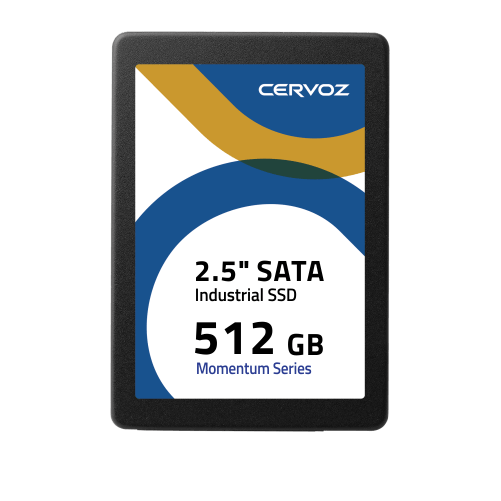
Cervoz is a renowned OEM that specializes in providing industrial-grade computer memory. Apart from better quality components and exacting standards, these memory modules differ by implementing better data management algorithms that improve the performance and health of the memory.
Their SSDs, for example, come equipped with a bevy of features to ensure better usage of memory. It starts with overprovisioning to keep a ratio of space free by default, making it smoother to move files around. This is paired with dynamic SLC caching to hold large files being written, wasting zero time on frantically locating empty sectors. For reading memory, a similar thing is achieved through a DRAM buffer that holds an index of file segments and allows them to be quickly located.
Finally, there are measures to slow down the natural wear and tear of the SSD as well. A robust error correction mechanism fixes developing errors and detects major cell failures before data loss can occur. Meanwhile, the algorithm spreads out the read/write cycles over the whole drive, distributing the load evenly. This prevents specific sections of flash cells from deteriorating prematurely and gives the SSD a longer lifespan before needing replacement.
Are industrial-grade SSDs worth it?
All the issues we have talked about stem from extensive usage. This means that a home user is unlikely to run into any of these bottlenecks, and a normal SSD is enough for them.
But industrial applications are a different matter. Drives used here are subject to harsh conditions and handle much more data on a daily basis. This is true even for the embedded PCs used for things like security systems or smart kiosks.
As such, the SSDs used must be able to withstand these pressures without any reduction in performance. And this is something that only industrial SSDs with better data management excel at. Thanks to our partnership with Cervoz, Global American can build and provide any customized embedded PC equipped with their best industrial memory. With even a free prototype to test things out, and a full-service guarantee to keep your setup running smoothly.
