
Edge AI and Embedded Systems: The Perfect Match
Posted on October 14, 2026
The massive investment in AI data centers is drawing all the attention, but the real AI revolution is happening elsewhere. When it comes to deploying AI for industrial applications, the cloud-based AI approach isn’t practical. The large amounts of data needed and the latency involved make it too slow and insecure.
That’s why the focus is moving toward Edge AI. With Edge AI, the hardware is deployed in the field instead of the cloud and handles all the processing for the AI algorithm seamlessly. Unsurprisingly, this means that embedded computers are the systems of choice for Edge AI, and we are seeing an evolution in the kind of systems offered to meet this demand.
The Rising Role of AI in Physical Applications
As we push the limits of what AI can do past chatbots into practical use cases, the technology is moving out of data centers into real-world installations. And the applications are many.
Image recognition, for example, lets an AI-powered computer recognize objects. This can be useful in automated warehousing, smart manufacturing, or even security, allowing machines to detect distinct objects and interact with them successfully without human intervention.
Another useful feature is predictive analysis. AI algorithms can analyze the data collected and predict trends, helping run things more efficiently. In industries, this can be used for predictive maintenance, anticipating faults before they happen, ensuring minimal downtime. In niches like healthcare, this can even be used to aid in patient diagnosis, or in logistics to anticipate demand spikes.
Why Edge AI?
The nature of AI means that it requires high computing power to deliver results, which usually means relying on Cloud computing. After all, the cloud lets an organization inexpensively access high-scale computing resources without investing in their own systems. But AI also requires a lot of data, and that is where the cloud becomes an issue.
First, transferring such large amounts of data to the cloud and then waiting for it to compute introduces a degree of lag. The delay can be critical in real-time physical applications where a machine has to immediately make a decision. Second, transferring that much data to a third-party server raises privacy and security concerns. These AI analytics require sensitive data like patient records or live video footage, and having client information leaked through an insecure cloud service is a big risk.
This makes Edge computing the actual best option for physical AI applications. The security concerns are alleviated since the data stays on-site and is processed right there. It also eliminates lag and allows AI algorithms to be integrated seamlessly in real-time applications.
A New Class of Embedded Systems
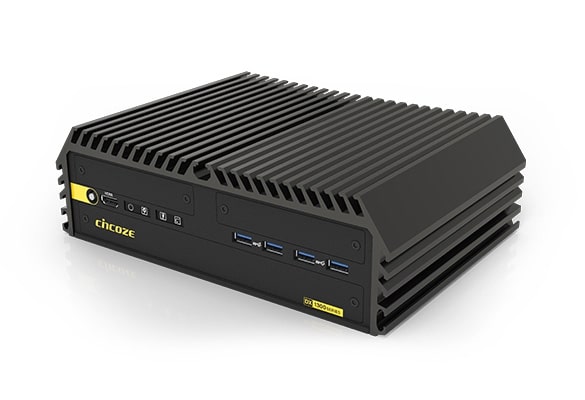
To meet this new demand for powerful Edge computers that can run AI applications, embedded systems are evolving. Instead of the trend of most applications favoring low-power embedded PCs that were not packed with much computing power, we are now getting powerful embedded systems that can run AI on the Edge.
These computers feature the latest processors and sometimes even GPUs to handle the AI workloads, along with rugged cooling solutions to ensure they can keep going in the complex real-world industrial environments they are deployed in. This is paired with a customizable approach to integrate with any kind of application, from automation to surveillance or even vehicle-mounted systems.
And thanks to a new generation of CPUs with more powerful multitasking capabilities, these embedded systems are better without being exorbitantly more expensive. Along with smarter, more efficient designs to handle things like cooling or I/O, we get PCs that do a lot more for the same investment.
Is Edge AI the Future?
For most consumer applications, the datacenter AI approach is the most efficient route, since home systems cannot keep up with the hardware requirements. But for any commercial or industrial use case, Edge AI gives the most power and control. For real-time applications like image recognition-based machinery, it is even essential, since the delay introduced by the cloud makes them unusable.
Even the Internet of Things (IoT) is moving towards AI, since it gives the devices smart responsiveness they otherwise lack. Edge AI is indeed going to be a major factor in embedded computing, and companies are starting to invest in it. Leading manufacturers are releasing embedded systems that are specialized for Edge AI, powered by new Intel and AMD chips that feature AI accelerator chips and scalable memory.
Is Edge AI useful for your application as well? Should you invest in Edge AI-capable embedded computers for your new setup? You can reach out to an experienced embedded systems provider like Global American to get a professional overview and try out a prototype to see what this new technology is capable of.
